
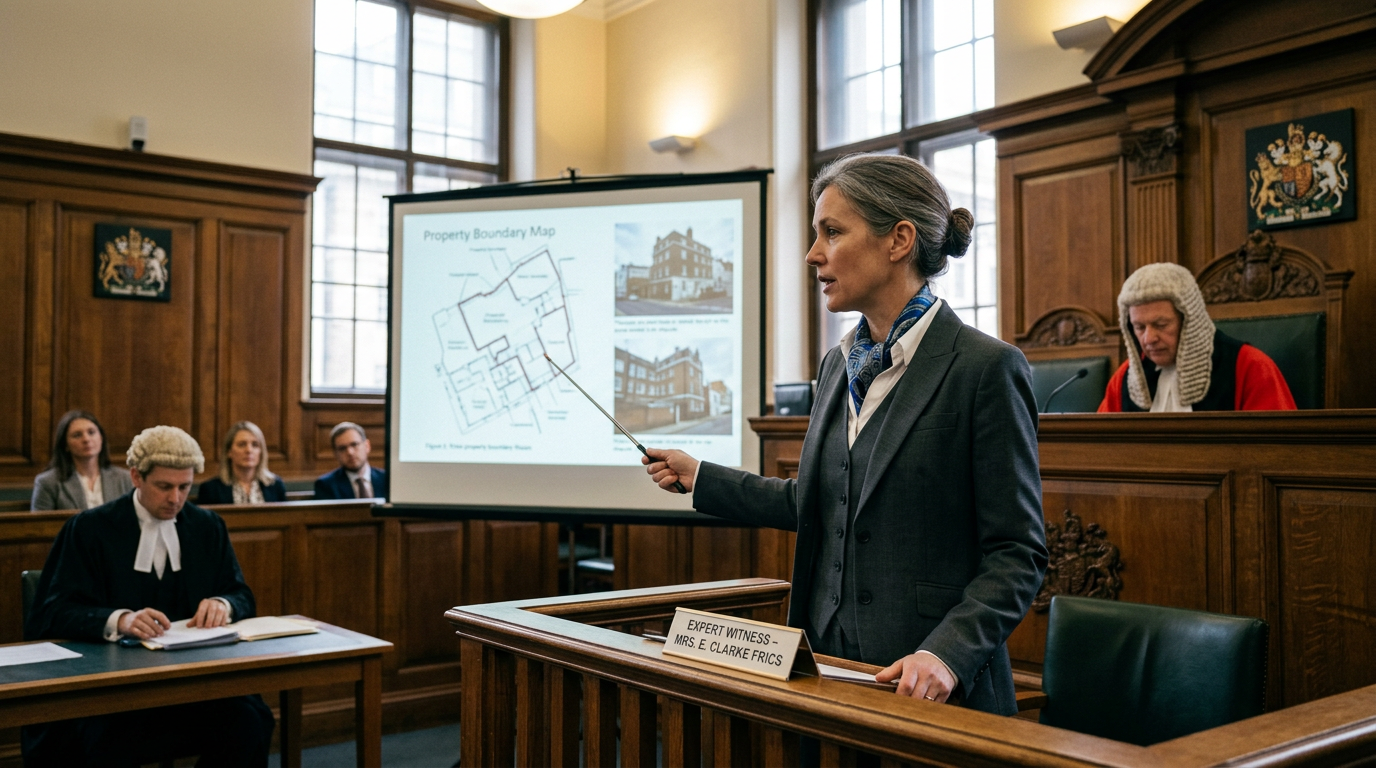
Property disputes — whether over boundaries, building defects, dilapidations, or lease terms — can quickly become complex and contentious. When technical surveying evidence is needed in legal or arbitration proceedings, an expert witness surveyor plays a crucial role. This guide explains what an expert witness surveyor does, when you need one, and what to look for when choosing one.
What Is an Expert Witness Surveyor?
An expert witness is a qualified professional appointed by one or more parties (or by the court itself) to provide independent, impartial opinion on technical matters that are beyond the knowledge of a judge or arbitrator. In property disputes, that expertise is typically provided by a RICS surveyor — a member of the Royal Institution of Chartered Surveyors (RICS).
Unlike an ordinary witness who gives evidence of fact, an expert witness is entitled to give their opinion based on their specialist knowledge and experience. Their primary duty is always to the court or tribunal — not to the party that appointed them. This independence is a fundamental principle of expert witness work and is enshrined in the Civil Procedure Rules (CPR) Part 35.
When Do You Need an Expert Witness Surveyor?
You may need an expert witness surveyor in a range of property-related disputes, including:
Dilapidations Claims
When a commercial lease ends, landlords often serve a schedule of dilapidations — a document claiming the cost of repairs and reinstatement that the tenant is alleged to be responsible for under the lease. These claims can run to hundreds of thousands of pounds and are a frequent source of dispute. An expert witness surveyor will assess the validity of the claim, the reasonableness of the costs, and the landlord's statutory obligations under the Leasehold Property (Repairs) Act 1938.
Boundary Disputes
Boundary disagreements between neighbouring landowners can escalate into serious and costly legal proceedings. An expert witness surveyor — particularly one with experience in land surveying and title plan interpretation — can provide the court with an objective assessment of where the legal boundary lies, based on deeds, title plans, physical evidence, and historical records.
Building Defects and Negligence Claims
Where a property buyer claims that a building surveyor failed to identify a defect that was present at the time of survey, an expert witness surveyor may be instructed to provide opinion on:
- Whether the defect was reasonably discoverable at the time of the original survey
- What a reasonably competent surveyor would have said about it
- The extent of loss suffered as a result of any alleged negligence
Party Wall Disputes
Most Party Wall Act matters are resolved by party wall surveyors without court involvement. However, appeals against party wall awards — and disputes about damage allegedly caused by neighbouring works — may require an expert witness surveyor to provide independent technical opinion.
Property Valuation Disputes
Disputes over property values — in the context of matrimonial proceedings, compulsory purchase, lease extension, enfranchisement, or probate — frequently require independent valuation expert evidence from an RICS Registered Valuer.
Construction and Contractor Disputes
Where a client and contractor dispute the quality or extent of building works, an expert witness surveyor can provide impartial assessment of whether the works were carried out to the required standard, and estimate the reasonable cost of remediation.
The Expert Witness Report
At the heart of expert witness work is the expert report. This is a formal written document that:
- States the expert's qualifications and experience
- Describes the instructions received and documents relied upon
- Sets out the facts and assumptions upon which the opinions are based
- Gives clear, reasoned opinions on the issues in dispute
- Includes a statement of truth and acknowledgement of duty to the court
The report must comply with CPR Part 35 and the relevant Practice Direction, and should be written in clear, accessible language that a non-technical reader (such as a judge) can understand.
Joint Experts and Without Prejudice Meetings
Courts often encourage — or direct — opposing expert witnesses to meet "without prejudice" to identify the areas on which they agree and to narrow the issues in dispute. This process can significantly reduce the time and cost of litigation. The result is a joint statement setting out agreed and disputed matters.
In some cases, courts will appoint a single joint expert (SJE) to provide evidence on behalf of all parties. This is particularly common in lower-value claims where the cost of two competing experts would be disproportionate.
"The expert witness's duty to the court above all else is not just a legal formality — it's the cornerstone of the whole process. A credible expert witness is one whose reports are balanced, who acknowledges weaknesses in their own party's case, and who is prepared to change their view if presented with compelling new evidence."
Choosing the Right Expert Witness Surveyor
When selecting an expert witness surveyor, look for:
- Full MRICS or FRICS membership with relevant specialism
- Experience of preparing CPR Part 35-compliant expert reports
- Experience of giving oral evidence in court or at arbitration
- A demonstrably independent, impartial approach
- Professional indemnity insurance in place
Need an Expert Witness Surveyor?
Pimlico Surveyors provides expert witness reports and oral testimony for property disputes across England and Wales. Get in touch to discuss your requirements.
Contact Us Expert Witness Services