
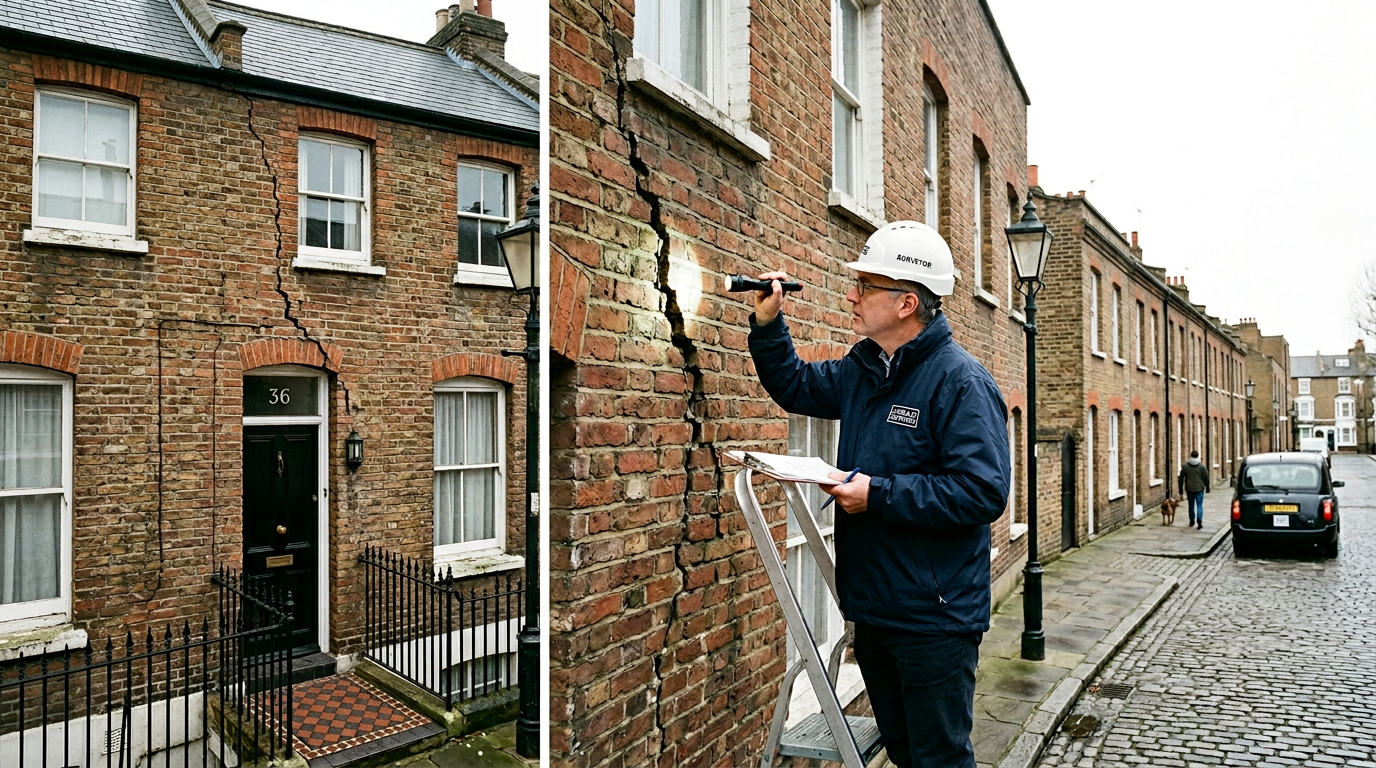
When you're buying a property — especially an older one in Pimlico or central London — you'll almost certainly hear the words "structural defects" at some point. But what does that actually mean? Should you walk away? Renegotiate? Commission further reports? Or just breathe and continue?
Having conducted hundreds of building surveys across London's Georgian and Victorian housing stock, I've learned that most defects are far less alarming than they initially appear — and that the ones you really need to worry about are rarely the ones that look most dramatic. Let me explain.
What Are Structural Defects?
A structural defect is any condition that affects the structural integrity of a building — its ability to safely bear loads and remain stable over time. This includes problems with:
- Foundations and substructure
- External walls and load-bearing internal walls
- Roof structure (rafters, purlins, ridge board)
- Floor joists and beams
- Lintels over windows and doors
Non-structural defects — such as damp, condensation, or cosmetic cracking — are separate issues, though they can sometimes mask structural problems.
Understanding Cracks: Not All Are Created Equal
Cracks are the most common concern for property buyers. But here's the thing: almost every building has cracks. What matters is what kind they are, where they are, and whether they are active (still moving) or historic.
The Building Research Establishment (BRE) classifies cracks from Category 0 (hairline, less than 0.1mm) to Category 5 (very severe structural damage). Here's a simplified guide:
| Category | Width | Description | Action Needed |
|---|---|---|---|
| 0–1 | Up to 1mm | Hairline / fine cracks | Usually decorative only |
| 2 | 1–5mm | Slight — can be easily filled | Monitor; check for movement |
| 3 | 5–15mm | Moderate — may indicate some movement | Investigate; specialist advice |
| 4 | 15–25mm | Severe — affects structural elements | Urgent specialist investigation |
| 5 | >25mm | Very severe structural damage | Structural engineer essential |
Subsidence, Settlement and Heave: What's the Difference?
Settlement is the gradual downward movement of a building as it adapts to the load placed on the ground. Some settlement is completely normal in older buildings, and historic settlement that has ceased is generally nothing to worry about.
Subsidence is more serious — it occurs when the ground beneath the foundations loses its load-bearing capacity. In London, the main causes are:
- Tree roots drying out clay subsoil
- Leaking drains washing away supporting soil
- Previous underground activity (old cellars, tunnels)
Heave is the opposite — ground swelling upwards, often due to moisture returning after a tree has been removed. Both subsidence and heave can cause significant structural damage if left unchecked.
Common Structural Defects in London Period Properties
After years of surveying Pimlico, Chelsea, and Belgravia properties, here are the structural issues I see most regularly:
- Lintel failure: Original stone or timber lintels over windows and doors deteriorating, causing cracking above openings
- Roof spread: Outward thrust of roof rafters causing wall tops to lean or bulge — common in Victorian terraces without modern roof ties
- Flank wall cracking: Long diagonal cracks on end-of-terrace or detached walls, often related to differential settlement
- Basement moisture ingress: Water penetrating through solid basement walls, causing structural and non-structural damage
- Corroded iron lintels: Victorian properties often have iron lintels that corrode, expand, and cause characteristic horizontal cracking
What Will a Building Survey Tell You?
A RICS Building Survey will assess all visible evidence of structural movement and defects. The surveyor will:
- Categorise all cracks using BRE guidance
- Assess whether movement appears active or historic
- Identify likely causes and recommend further investigation where needed
- Provide estimated repair costs where appropriate
If the building survey reveals significant structural concerns, we'll always recommend commissioning a structural engineer's report before you exchange contracts.
FAQ: Structural Defects
Not always. Hairline and fine cracks are very common and usually don't need further investigation. Your surveyor will advise specifically whether an engineer's assessment is recommended, and for which specific elements.
Most structural defects are repairable. The question is the cost of repair versus the property's value. Major issues like active subsidence may require expensive underpinning and could affect your ability to get insurance — in those cases, some buyers do decide to walk away.
A HomeBuyer Report will identify visible defects and flag significant concerns. However, for older, unusual, or potentially problematic properties, a Building Survey provides far greater depth of structural analysis and repair advice.