
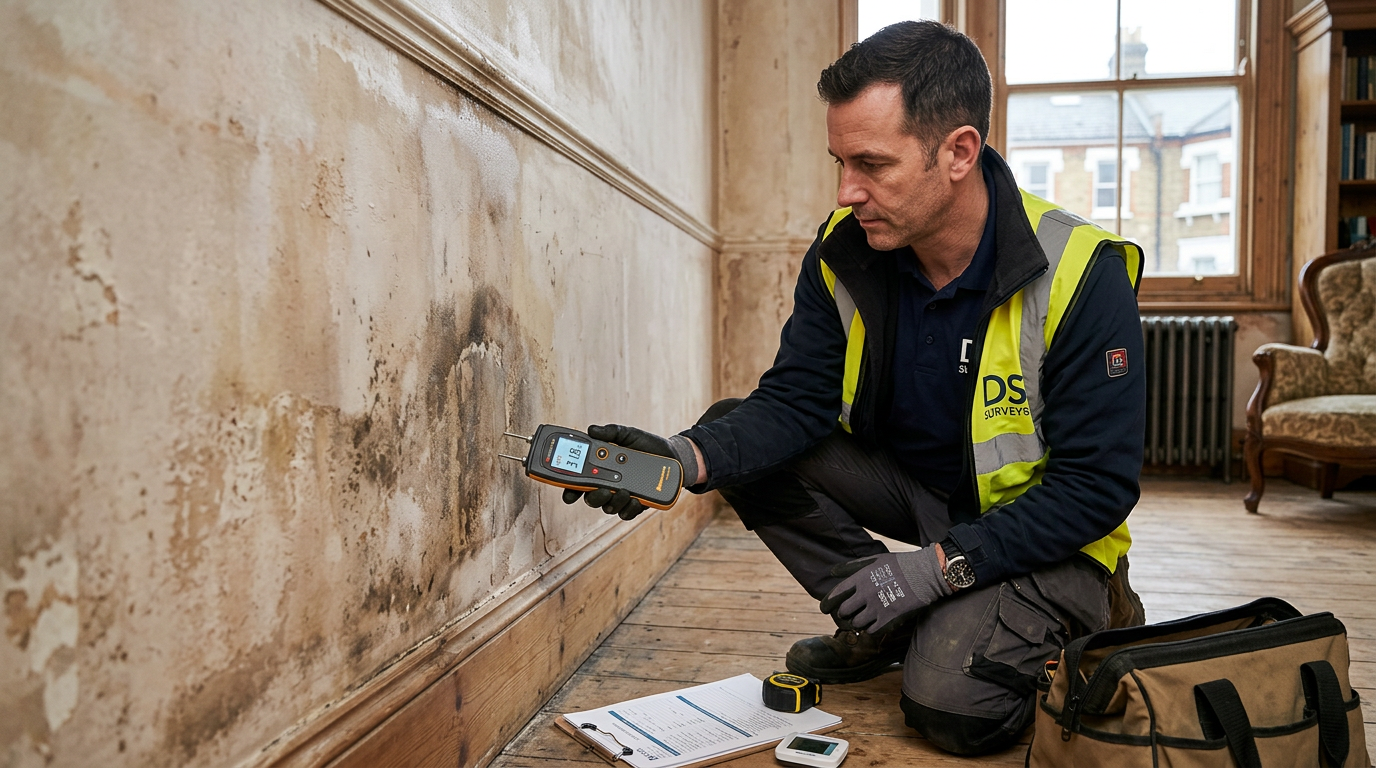
Damp is the word that strikes fear into every property buyer's heart. And yet, in over a decade of surveying period properties across London and the Home Counties, we've found that damp is also one of the most frequently misdiagnosed — and unnecessarily alarming — findings in a building survey. Understanding the different types of damp, their causes, and the appropriate remedies can save buyers and homeowners thousands of pounds in unnecessary treatments and repairs.
Why Period Properties Are Particularly Susceptible to Damp
Victorian and Georgian properties (typically built between 1800 and 1910) were constructed using breathable materials: lime mortar, London stock brick, lime plaster, and original timber floors. These materials were designed to absorb and release moisture as part of the natural cycle of a building.
Problems arise when modern, non-breathable materials — cement renders, gypsum plasters, or impermeable paints — are applied over or alongside these breathable originals. Moisture that would previously have been able to evaporate becomes trapped, leading to the damp patches and associated damage that cause so much concern.
The Three Main Types of Damp
1. Condensation
Condensation is by far the most common form of damp in all residential properties, including period homes. It occurs when warm, moisture-laden air contacts a cold surface and the moisture condenses into liquid water. Signs include:
- Black mould growth on walls, window reveals, and bathroom ceilings
- Steamed-up windows (especially in cold weather)
- Damp patches on cold external walls, typically at low level or in corners
- Musty smell in poorly ventilated rooms
Condensation is primarily a ventilation and occupancy issue, not a structural one. It is typically remediated by improving ventilation (including mechanical extract fans in kitchens and bathrooms), increasing heating levels, and improving insulation to raise the temperature of cold surfaces.
Important: Many homeowners — and, sadly, some less scrupulous damp treatment contractors — misidentify condensation as rising damp and recommend expensive chemical DPC injection treatments that are entirely inappropriate and unnecessary. A professional RICS surveyor will accurately distinguish between the two.
2. Penetrating Damp
Penetrating damp is caused by water entering through the external fabric of the building — through defective pointing, failed render, leaking gutters or downpipes, failed window or door seals, or porous brickwork. In period properties, common causes include:
- Cracked or hollow stucco render (particularly common in London's Georgian terraces)
- Failed lead flashings at roof-wall junctions and around chimney stacks
- Blocked or cracked rainwater goods — gutters and downpipes
- Failed pointing to brick parapets and chimneys
- Bridging of the external ground level above the original DPC (or air brick level)
Penetrating damp patches are often horizontal or roughly horizontal in pattern, and may be worse after heavy rainfall. Remediation involves identifying and eliminating the source of water ingress — not simply applying a damp-proof membrane to the interior.
3. Rising Damp
Rising damp occurs when groundwater travels upward through porous masonry by capillary action. It is characterised by a classic 'tide mark' of discolouration at low level (typically no higher than about 1 metre), salt crystallisation on wall surfaces, and deterioration of skirting boards and floor coverings at base of wall level.
True rising damp in period properties is much less common than is often claimed. Many buildings with genuine damp-proof courses — original slate DPCs are common in Victorian properties — do not suffer from rising damp at all. Where a DPC is absent or has failed, remediation options include:
- Chemical injection damp-proof course (requires careful specification)
- Electro-osmotic DPC systems
- Drainage improvements to reduce ground water levels around the building
- Improving ventilation to sub-floor voids where suspended timber floors exist
What Happens During a Damp Survey?
During an RICS Building Survey or HomeBuyer Report, our surveyors will:
- Visually inspect all accessible internal and external wall surfaces for signs of damp staining, mould, efflorescence (salt deposits), and physical deterioration
- Use a calibrated electrical resistance moisture meter to measure moisture levels in walls, particularly at low level, around windows and door openings, and wherever staining is visible
- Inspect external elevations for defects that could be allowing water ingress
- Check the condition of rainwater goods and drainage at the base of external walls
- Review the relationship between external ground levels and internal floor/DPC levels
Where we identify significant damp, our report will describe the type, extent, likely cause, and recommend whether a specialist damp contractor should be instructed to carry out a more detailed investigation before exchange of contracts.
"One of the most valuable things we can do for a buyer is to accurately distinguish between a simple condensation problem — which the new owners can address cheaply — and genuine penetrating damp that requires external repair works. The difference in cost and complexity is enormous."
Should Damp Put You Off Buying a Period Property?
Not necessarily. Damp is very common in period properties and, in most cases, is entirely manageable once properly diagnosed and treated. The key is to:
- Get a thorough survey from a qualified RICS surveyor before you exchange
- Get accurate quotes from reputable contractors for any works recommended
- Use survey findings to negotiate a price reduction or require repairs prior to completion
- Be wary of one-size-fits-all damp treatment companies who recommend chemical injection for every property
Concerned About Damp in a Property You're Buying?
Our RICS surveyors will give you an accurate, independent assessment — not a sales pitch. Get a free, no-obligation quote for a building survey today.
Get a Free Quote About Building Surveys